
In industrial sites, level signal fluctuation is one of the most common measurement problems.
Many users experience similar situations:
- The level value keeps jumping
- Trend curves rise and fall irregularly
- Level signals refresh frequently in the DCS system
- The level does not seem to change much, but the output is unstable
- Occasional sudden spikes or drops in level readings
The first reaction is often:
“Is the instrument faulty?”
However, in many industrial applications: Level fluctuation does not necessarily mean instrument failure.
In many cases: The instrument is simply reflecting a complex process condition.
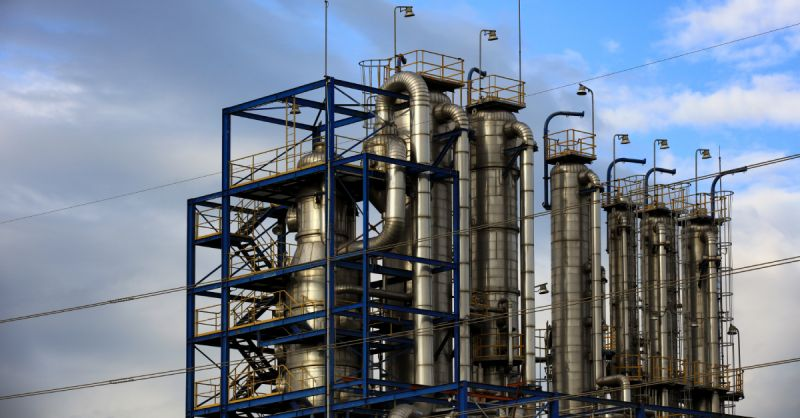
Industrial Level Measurement Is Not Done in an Ideal Environment
Many people tend to assume:
Level measurement is simply measuring a flat surface.
But in real industrial environments, the liquid surface is far more complex.
For example:
- Agitation inside the tank
- Continuous circulation of liquid
- Incoming flow impacting the surface
- Foam on the surface
- Vapor and condensation inside the tank
- Constant surface movement
- Medium sticking to equipment
Therefore: Industrial level measurement is essentially about finding the real level under complex disturbances.
This is why:
The same instrument model can be very stable in one application
but unstable in another.
Many Fluctuations Actually Come From the Liquid Surface Itself
In some applications:
The liquid surface itself is not stable.
For example:
- Mixing tanks
- Circulation basins
- Dosing systems
- High-speed filling storage tanks
In these cases, the level is continuously changing.
Therefore: The fluctuations seen by the instrument may reflect real level movement.
This is not necessarily a measurement error.
In automation systems, what is often needed is not:
“Perfect instantaneous level every second”
but rather: “A stable and usable trend for control purposes.”
That is why industrial systems often use:
- Damping
- Averaging time
- Signal filtering
The purpose is not to improve accuracy,
but to: Reduce the impact of short-term fluctuations on control systems.
Foam, Steam, and Agitation Affect Measurement Signals
Many level issues are not electronic failures.
They are caused by: Process conditions interfering with signal propagation.
Foam
Common in wastewater, food, and chemical industries.
Thick foam can:
- Absorb ultrasonic waves
- Weaken radar echoes
- Cause unstable signals
Steam
In high-temperature tanks, steam can affect:
- Ultrasonic propagation speed
- Microwave signal stability
Leading to:
- Signal drift
- Measurement delay
- Reading fluctuations
Agitation
Mixers cause continuous surface movement.
For non-contact measurement:
The liquid surface angle constantly changes,
resulting in: Continuous changes in echo position.
This leads to:
- Jumping values
- Unstable output
A very common situation in mixing tanks.
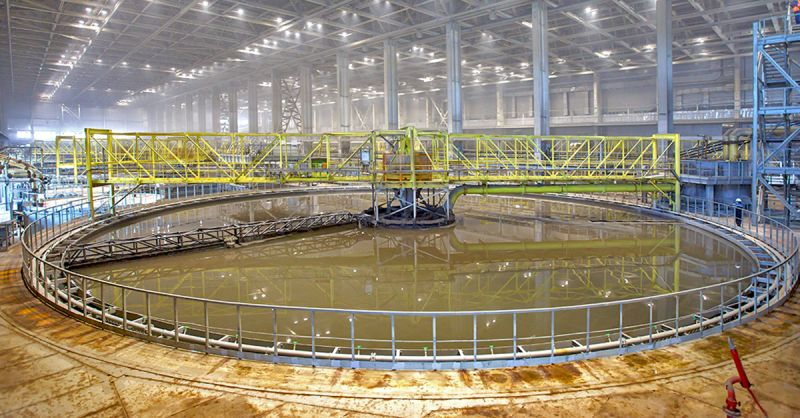
Sometimes the Problem Is Not the Instrument, but the Tank Structure
Many field engineers focus on:
- Model
- Brand
- Accuracy
But in reality: The tank structure itself can affect measurement stability.
For example:
- Internal coils
- Supports
- Ladders
- Heating elements
- Stirrer shafts
- Narrow tank geometry
These structures can cause: False echoes and interference reflections.
Especially for radar level instruments:
They work by receiving echo signals.
In complex structures, the instrument may receive:
- Multiple reflections
- False echoes
- Interference signals
This leads to:
- Level jumps
- Occasional abnormal values
- Unstable readings
Industrial Engineering Is Not About “Eliminating All Problems”
Many people hope to find:
“A perfect level instrument that works in all conditions.”
But in reality:
There is almost no universal measurement technology.
Because every technology has limitations.
Ultrasonic Level Measurement
More suitable for:
- Normal temperature
- No steam
- Low foam environments
But less stable in:
- High steam
- Heavy foam
- Closed high-temperature conditions
Non-Contact Radar
More resistant to steam and widely used in harsh environments.
But still affected by:
- Installation position
- Tank structure
- Internal reflections
Guided Wave Radar
Since microwaves travel along a probe:
It is more suitable for:
- Small tanks
- Turbulent surfaces
- Interference-heavy environments
Because it reduces: External reflection interference.
The Real Engineering Goal Is Finding the Most Stable Solution Under Constraints
In industrial sites, many conditions cannot be changed.
For example:
- Mixing must exist
- Foam cannot be fully removed
- Tank structure is fixed
- The process is inherently unstable
Therefore:
The real goal is not: “Eliminate all problems completely”
but: “Find the most stable solution under constraints.”
This is why level instrument selection is not only about:
- Specifications
- Accuracy
- Brand
but more importantly about: Understanding how process conditions affect measurement principles.
Stability Is Often More Important Than Theoretical Accuracy
In many automation systems:
Control systems are not afraid of:
“Small measurement errors”
but they are highly sensitive to: “Continuous signal instability.”
Therefore, a truly suitable level measurement solution is not:
the one with the best theoretical performance,
but: the one that remains stable under real-world industrial conditions.