
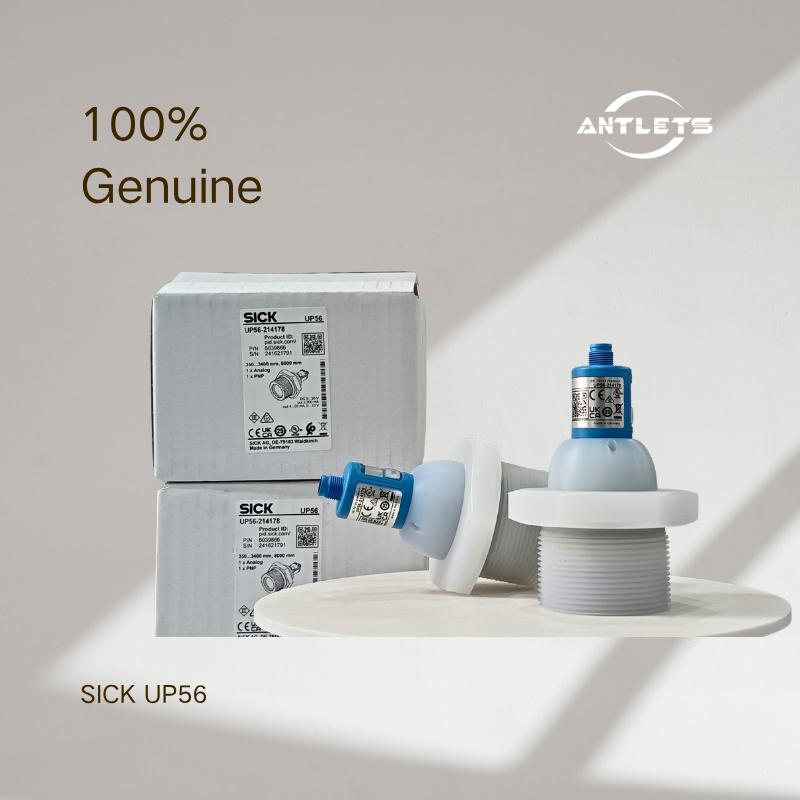
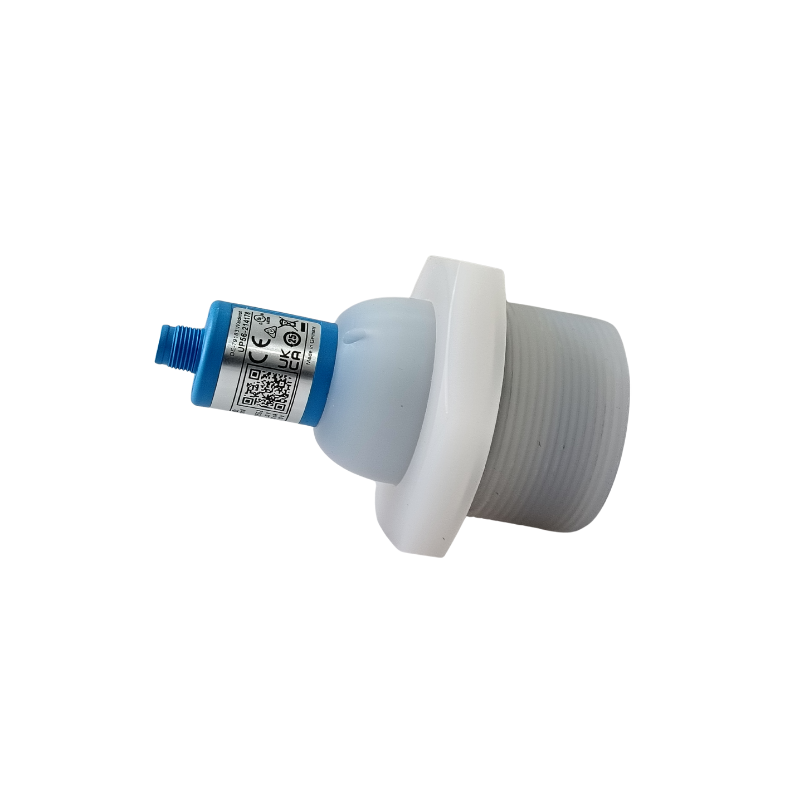
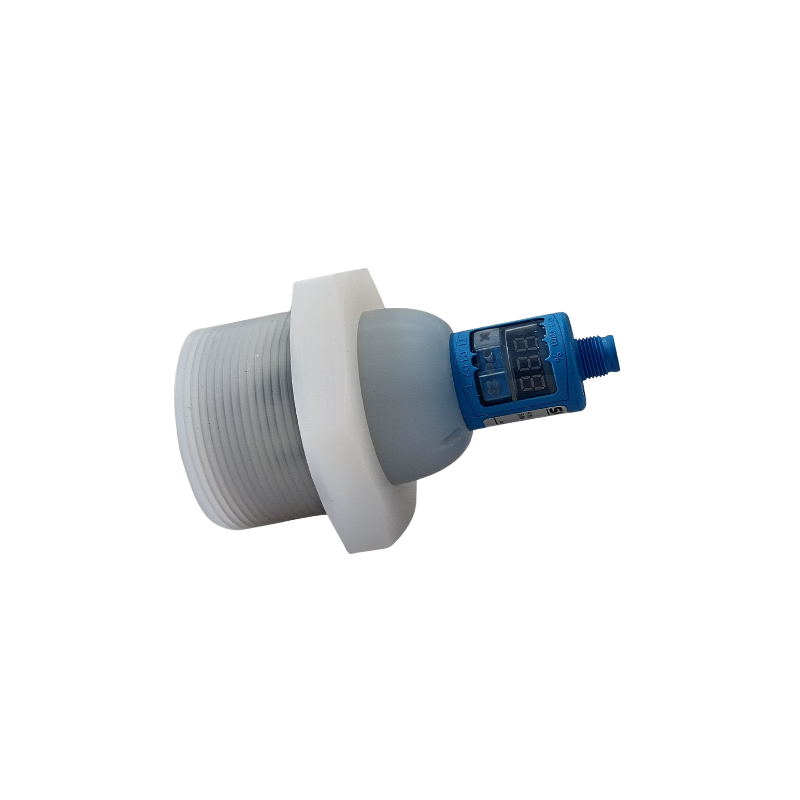
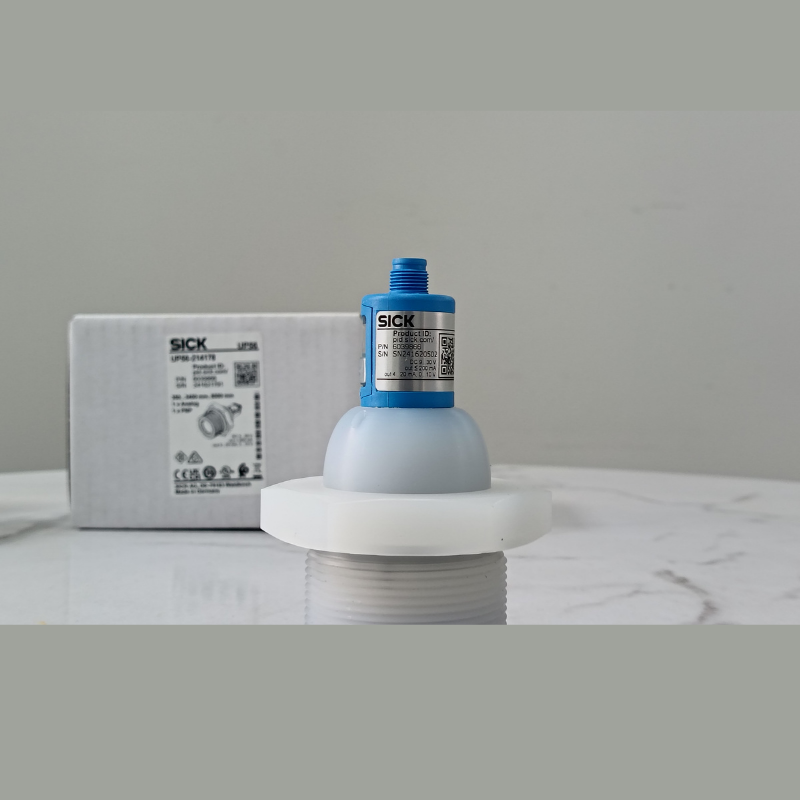
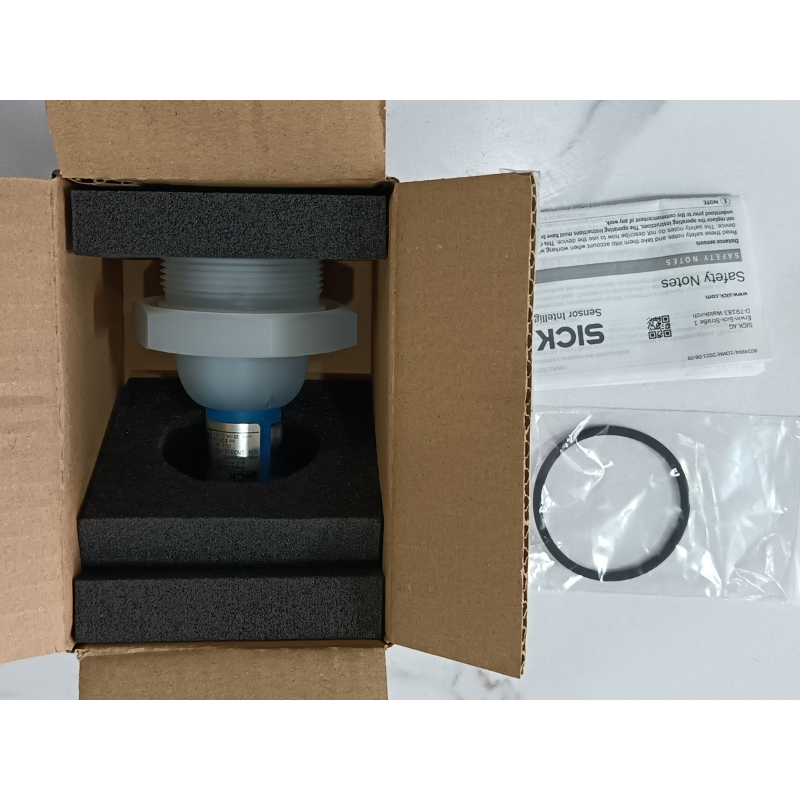
SICK UP56-214178 Series Ultrasonic Level Sensor
$700.00
The SICK UP56 Series ultrasonic level sensor is a robust non‑contact level measurement solution for industrial liquids, viscous media and bulk materials. It uses ultrasonic sensing technology to provide precise continuous level monitoring without process contact. Because the transducer features PTFE protection and high pressure resistance, it remains reliable in demanding environments up to 6 bar.
This series includes variants with analog and switching outputs, optional display and IO‑Link for parameterization. Typical applications include tank level control, overfill monitoring, process liquids and chemical reservoir management.
Not Recommended For:
• Applications requiring only simple local float switches
• Measurement of ultra‑low density vapors or gas‑only environments
product overview UP56
Selection Notes
• Confirm the required measurement range, as UP56 models support various ranges up to several meters.
• Verify the output type needed — available options include analog (4–20 mA), 0–10 V, PNP switching or IO‑Link.
• Choose the correct process connection such as threaded G1 or immersion tube mount.
• Check the operating temperature and pressure limits of the chosen variant. Most models handle -25 °C to +70 °C and pressures up to 6 bar.
• In addition, ensure the body material matches the process media, with stainless steel or plastic/TPU options available.
Why Choose the Sick UP56 Series
• Non‑Contact Ultrasonic Measurement
Ultrasonic technology measures level without contacting the process medium. This reduces wear and maintenance compared to contacting probes.
• Pressure‑Resistant and Durable Transducer
The transducer features PTFE protection and can withstand pressures up to 6 bar, making it suitable for pressurized tanks and vessels.
• Versatile Outputs and Interfaces
The UP56 series supports a range of outputs, including 4–20 mA, 0–10 V and switching signals. Certain variants also feature IO‑Link for easy parameterization and diagnostics.
• Wide Application Range
Suitable for liquids, viscous media and abrasive bulk solids, the series addresses many process environments.
• Integral Display Option
Some models include a local display, enabling direct visual feedback of level values without external devices.
FAQ
Q: What measurement principle does the UP56 series use?
A: The series uses ultrasonic non‑contact sensing, transmitting sound waves and measuring time‑of‑flight to determine level.
Q: What outputs are available on these sensors?
A: Outputs include analog (4–20 mA and 0–10 V) and switching (PNP), and some variants support IO‑Link parameterization.
Q: Can UP56 handle pressurized tanks?
A: Yes. The PTFE‑protected transducer is designed to withstand pressures up to 6 bar, enabling use in pressurised systems.
Q: Where is this series commonly used?
A: It is widely used for continuous level measurement in tanks, reservoirs, process vessels and bulk storage, especially in chemical, water and manufacturing industries.
| Medium | Fluids, bulk solids |
|---|---|
| Measurement | Switch, Continuous |
| Measuring range in tank | 350 mm … 3,400 mm |
| Measuring range immersion tube | 350 mm … 8,000 mm |
| Process pressure | 0 bar … 6 bar |
| Process temperature | –25 °C … +70 °C |
| Accuracy of sensor element | ≤ 2 % |
| Reproducibility | ± 0.15 % |
| Resolution | 0.18 mm |
| Response time | 240 ms |
| MTTF | > 100 years |
| Supply voltage | 9 V DC … 30 V DC |
| Residual ripple | ± 10 % |
| Power consumption | ≤ 80 mA |
| Protection class | III |
| Connection type | Round connector M12 x 1, 5-pin |
| Output signal | 1 x PNP + 4 mA … 20 mA / 0 V … 10 V |
| Hysteresis | 50 mm |
| Output current | 200 mA |
| Time delay before availability | ≤ 300 ms |
| Enclosure rating | IP67 |
| Ultrasonic frequency | 120 kHz |
| Ultrasonic transducer | PTFE coating, FFKM |

Reviews
There are no reviews yet.