
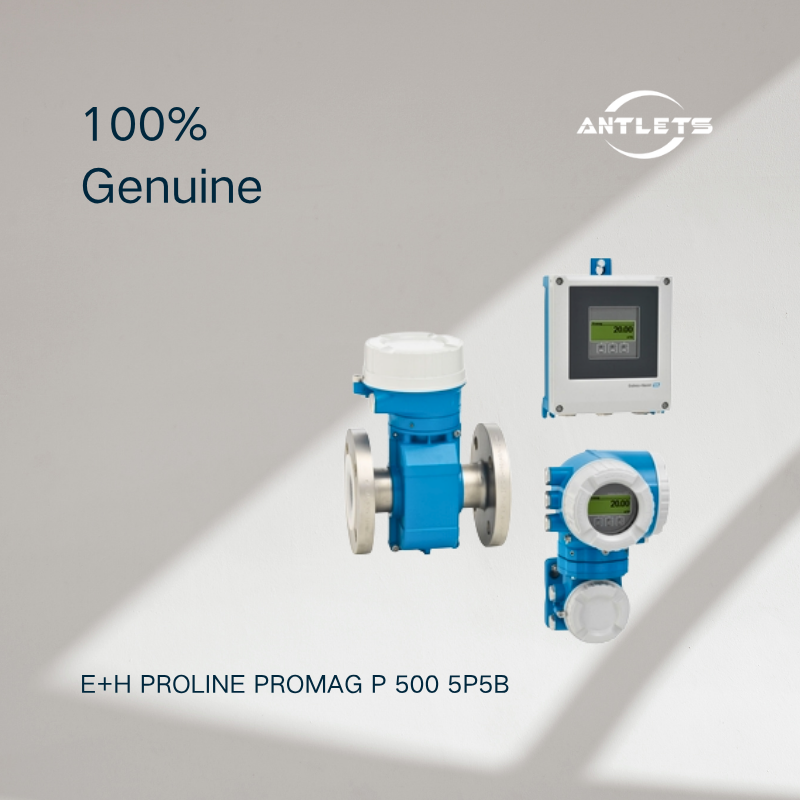
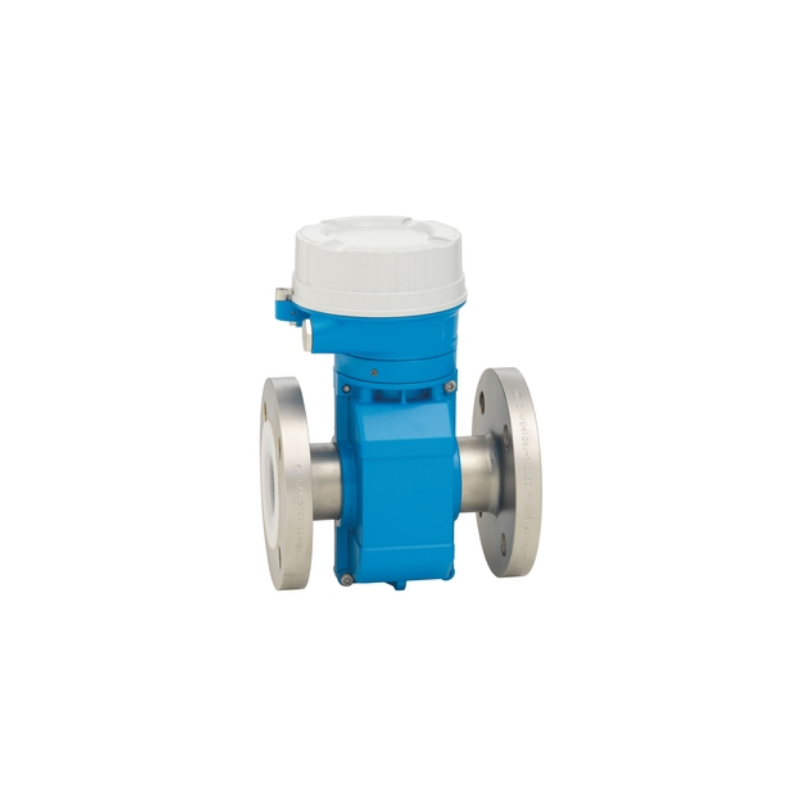
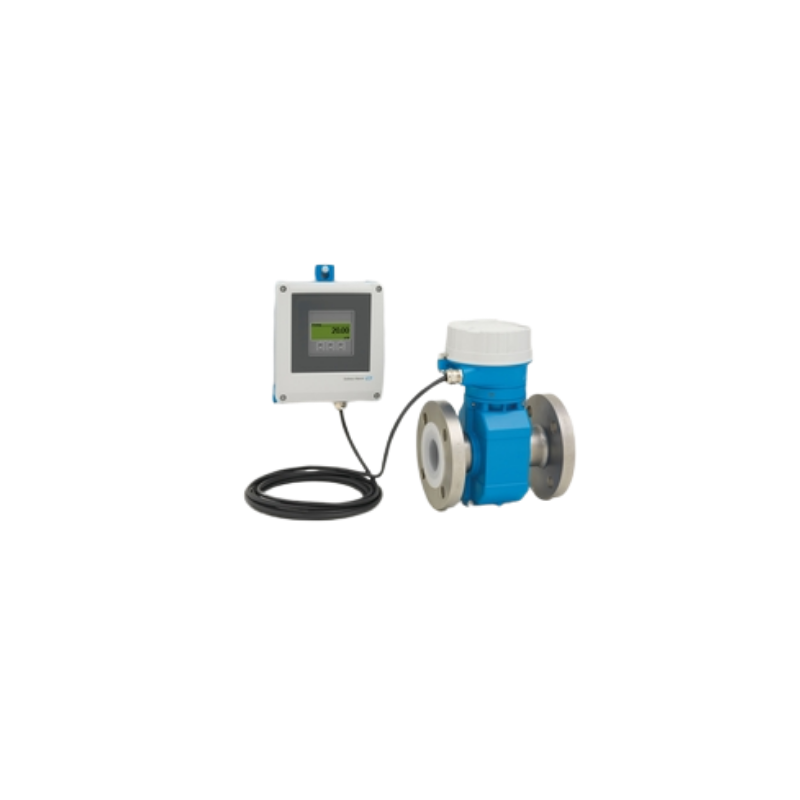
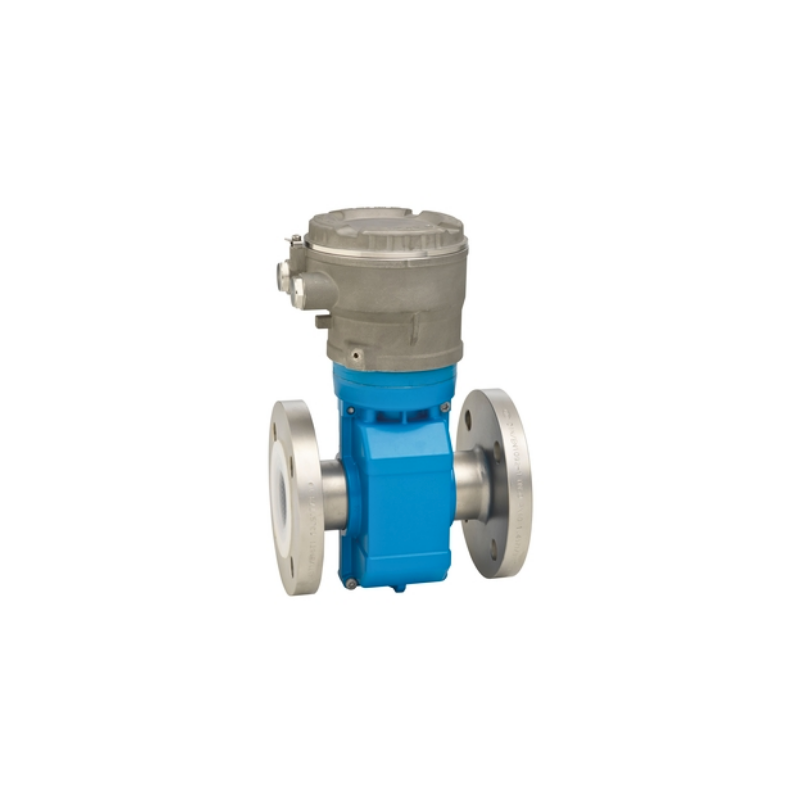
E+H Proline Promag P 500 5P5B electromagnetic flowmeter
$2,000.00
The Proline Promag P 500 (5P5B) Electromagnetic Flowmeter delivers high-accuracy flow measurement for conductive liquids in chemical and process industries. It uses electromagnetic measurement technology, ensuring stable performance without pressure loss.
This model features a remote transmitter design, which enables flexible installation in harsh environments. In addition, it offers advanced diagnostics and robust chemical resistance, making it ideal for corrosive and aggressive media such as acids and alkalis.
Not Recommended For:
• Non-conductive liquids (e.g., oils, gases)
• Applications with very low conductivity
Selection Notes
• Measurement Principle: Uses electromagnetic flow measurement, which requires conductive liquids. Confirm that your medium meets conductivity requirements.
• Application Type: Designed for chemical and process industries, especially for corrosive fluids such as acids and alkalis.
• Installation Type: Features a remote-mounted transmitter, suitable for harsh environments or difficult installation conditions.
• Material Selection: Choose appropriate lining (PTFE, PFA) and electrode materials based on chemical compatibility.
• Output and Communication: Supports 4–20 mA, pulse, HART, and digital communication options for system integration.
Why Choose the Proline Promag P 500
• Accurate Measurement for Chemical Processes
The device uses Faraday’s law to measure flow precisely. Therefore, results remain stable regardless of pressure, temperature, or density changes.
• Remote Transmitter for Harsh Environments
The remote design allows installation in high-temperature, vibration, or restricted areas. As a result, system reliability improves.
• Excellent Chemical Resistance
With high-performance lining and electrode materials, the flowmeter resists corrosive and aggressive media. This ensures long service life.
• No Pressure Loss
The sensor has no internal obstruction, so it does not create pressure drop. This improves process efficiency and reduces energy consumption.
• Advanced Diagnostics and Reliability
Built-in diagnostics help monitor device health and detect issues early. In addition, this reduces downtime and maintenance costs.
FAQ
Q: What applications is the Promag P 500 suitable for?
A: It is ideal for chemical processing, acid and alkali measurement, and industrial flow applications.
Q: What is the advantage of the remote transmitter design?
A: It allows flexible installation in harsh or hard-to-access environments, improving system reliability and safety.
Q: Can it measure corrosive liquids?
A: Yes. It is specifically designed for corrosive and aggressive media, thanks to its resistant materials.
Q: Does it cause pressure loss?
A: No. The electromagnetic principle ensures no obstruction and no pressure drop.
| Nominal diameter range | DN 15 to 600 (½ to 24") |
|---|---|
| Wetted materials | Liner: PFA; PTFE |
| Measured variables | Volume flow, conductivity, mass flow |
| Max. measurement error | Volume flow (standard): ±0.5 % o.r.± 1 mm/s (0.04 in/s) |
| Measuring range | 4 dm³/min to 9600 m³/h (1 gal/min to 44 000 gal/min) |
| Max. process pressure | PN 40, Class 300, 20K |
| Medium temperature range | Liner material PFA: –20 to +150 °C (–4 to +302 °F) |
| Ambient temperature range | Flange material carbon steel: –10 to +60 °C (+14 to +140 °F) |
| Sensor housing material | DN 15 to 300 (½ to 12"): AlSi10Mg, coated |
| Transmitter housing material | AlSi10Mg, coated; 1.4409 (CF3M) similar to 316L; Polycarbonat |
| Degree of protection | Sensor remote version (standard): IP66/67, type 4X enclosure |
| Display/Operation | 4-line backlit display with touch control (operation from outside) |
| Outputs | 4 outputs: |
| Inputs | Status input |
| Digital communication | HART, PROFIBUS DP, PROFIBUS PA, FOUNDATION Fieldbus, Modbus RS485, PROFINET, PROFINET over Ethernet-APL, Ethernet/IP, OPC-UA |
| Power supply | DC 24 V |
| Hazardous area approvals | ATEX, IECEx, cCSAus, INMETRO, NEPSI, EAC; JPN, UK Ex, KC |
| Product safety | CE, C-tick, EAC marking |
| Functional safety | Functional safety according to IEC 61508, applicable in safety-relevant applications in accordance with IEC 61511 |
| Metrological approvals and certificates | Calibration performed on accredited calibration facilities (acc. to ISO/IEC 17025) |
| Marine approvals and certificates | LR approval, DNV approval, ABS approval, BV approval |
| Pressure approvals and certificates | PED, CRN |
| Material certificates | 3.1 material |
| Hygienic approvals and certificates | ACS, NSF 61, WRAS |
Related products
-
-
Sale!

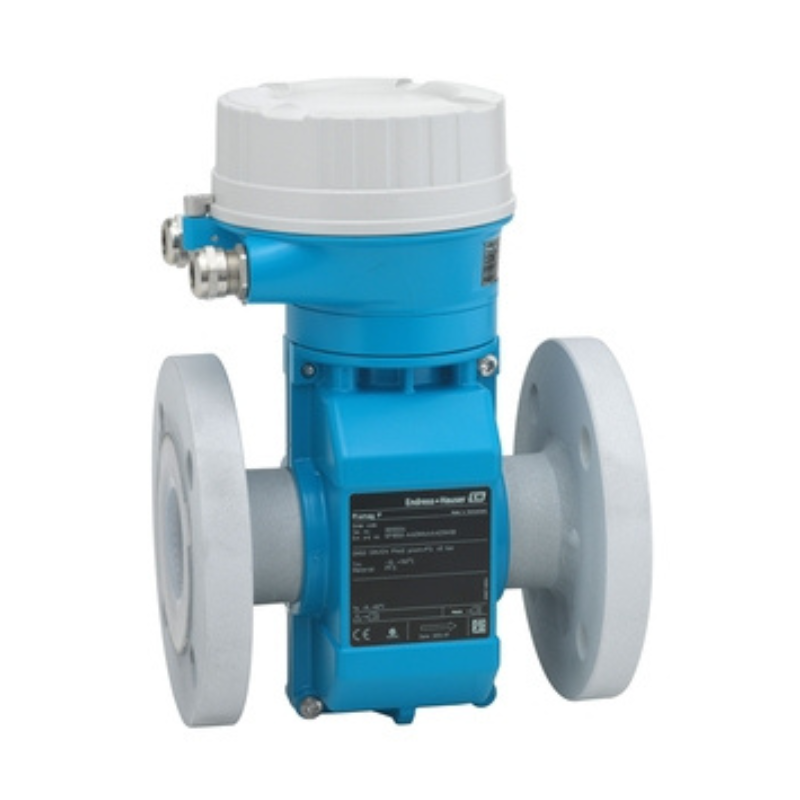
Proline Promag P 300 5P3B electromagnetic flowmeter
Original price was: $2,400.00.$2,250.00Current price is: $2,250.00. Add to cart -
-

Reviews
There are no reviews yet.