
Process Measurement in the Chemical Industry
Engineering Requirements Driven by Complex Operating Conditions
1. The Nature of the Chemical Industry: Measuring Under Conditions, Not Just Measuring Values
In the chemical and related process industries, process measurement is rarely a simple task of obtaining numerical values. More accurately, it is an engineering function that must remain reliable and predictable under complex, harsh, and continuously changing operating conditions.
Typical chemical processes involve corrosive media, high temperatures and pressures, continuous operation, and strict safety constraints. In such conditions, if a measurement fails, it does not merely cause data loss—it can destabilize the process, reduce product quality, or even force an unplanned plant shutdown.
From an engineering perspective, measurement instruments are therefore not auxiliary devices, but fundamental components of process safety, operational stability, and production continuity.
2. Identical Measurement Parameters, Different Engineering Meanings
Typical applications, such as measuring burden levels in blast furnaces and monitoring conductivity in pickling processes, show that even seemingly simple measurement parameters can carry entirely different engineering meanings depending on the process context.
In chemical applications, process measurements often serve distinct engineering roles:
- Some measurements define safe operating boundaries for equipment and systems
- Others act as early indicators of abnormal process conditions
- Certain parameters directly support process control and product consistency
- Some measurements form the basis for material balance, energy evaluation, and operational optimization
- Analytical measurements often function as acceptability indicators, determining whether intervention is required
As a result, engineers focus less on the parameter itself and more on the engineering responsibility the measurement carries—and the consequences if it fails.
3. Engineering Example 1: Bulk Solids Level Measurement in Blast Furnaces

In metallurgical and related chemical processes, blast furnace charging represents a highly complex level measurement scenario.
The charging process involves coke, iron ore, limestone, and various additives. These materials differ significantly in particle size, bulk density, and piling behavior, and their distribution directly affects gas permeability, reaction efficiency, and furnace stability.
When a rotating chute is used for charging, axial symmetry of material distribution must be continuously monitored and controlled. This requires real-time observation of the burden surface and corresponding adjustment of the charging position.
In practice, effective burden control often requires up to five level measurement instruments working simultaneously to analyze surface shape rather than a single-point level value. Such applications demand:
- Reliable operation under high temperature and heavy dust
- Stable signal behavior across different material types
- Adequate spatial resolution for surface profile analysis
- Predictable long-term performance
Under these conditions, 80 GHz radar level measurement technology is commonly selected due to its narrow beam angle and strong resistance to dust interference—an engineering choice driven by operating conditions rather than technological novelty.
4. Engineering Example 2: Conductivity Measurement in Cold Rolling Pickling Processes
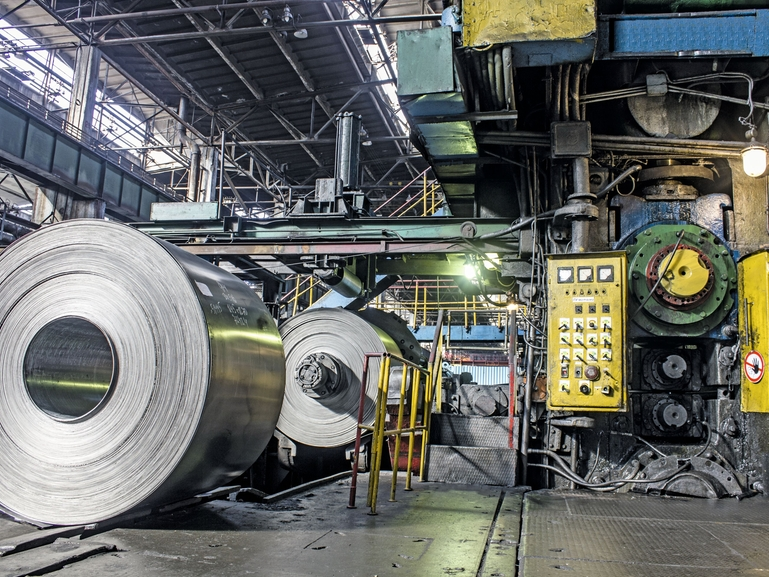
In cold rolling mills, high-concentration hydrochloric acid is commonly used to remove oxide scale from steel surfaces. The acid is reused repeatedly, during which it becomes contaminated with iron chloride and may form deposits on the steel surface.
If acid concentration is not properly controlled, several issues may arise:
- Reduced pickling efficiency and inconsistent product quality
- Acid over-concentration or crystallization
- Increased maintenance and unplanned downtime
By measuring the conductivity of the acid online, changes in acid concentration can be indirectly monitored. When values deviate from the defined operating range, rinsing water can be injected as required to stabilize the process.
Compared to manual sampling and laboratory analysis, online conductivity measurement significantly reduces response time and operating costs. More importantly, it eliminates the need to transport toxic and corrosive media, thereby reducing personnel safety risks. For such environments, conductivity sensors are typically constructed from PFA or PEEK, ensuring long-term resistance to aggressive chemical corrosion.
5. Reliability Over Complexity: An Engineering Consensus
Both examples highlight a fundamental principle shared across chemical applications:
The primary value of process measurement lies in reliability and predictability under real operating conditions.
While digital communication and advanced diagnostics are increasingly adopted, their usefulness depends entirely on the stability of the measurement itself. In high-risk processes with high downtime costs, engineers tend to favor measurement principles with clear operating behavior and well-defined failure modes over technically complex but less predictable solutions.
6. Foundation for Further Technical Discussion
This article provides a high-level engineering overview of process measurement in the chemical industry, emphasizing operating conditions and engineering responsibility. Subsequent articles will examine level, pressure, temperature, flow, and analytical measurements in greater detail, focusing on application-specific selection logic and practical limitations.
For detailed technical specifications, application advice, or commercial inquiries regarding a wider range of industry brands, please contact us via WhatsApp: +86 132 7933 7527 or Email: info@antletstech.com. Our experienced engineering team is ready to support your project.
-
 Temperature Measurement59 products
 -
 Pressure Measurement169 products
 -
 Level Measurement263 products
 -
 Flow Measurement183 products
 -
 Liquid Analysis36 products