
Level measurement is not just about “checking the height.”
In real industrial environments, different applications require completely different approaches. This article explores three typical scenarios, helping you understand the real challenges of level measurement and which type of level instrument is best suited for each.
Why Level Measurement Is More Than Just “Checking Height”
Many people’s first thought is:
👉 “Just see how much liquid is left in the tank.”
But in industrial processes, level directly affects:
- Safety (prevent overflow)
- Equipment protection (avoid dry running)
- Product quality
- Inventory and cost control
The real challenge is not “how to measure,” but:
👉 How to measure reliably in complex environments
1. Chemical Tanks: The Challenge Is Survival, Not Accuracy
Imagine:
👉 Measuring water in a bucket with a ruler—easy.
Now imagine:
👉 A chemical tank filled with strong acids, heated, and continuously stirred.
The challenges are completely different:
- Direct contact is not possible (corrosion risk)
- You can’t reach inside (dangerous)
- Steam and foam interfere with readings
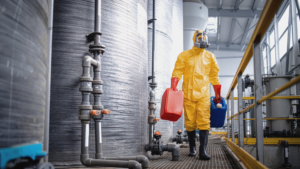
👉 So the core question becomes:
Can the instrument survive long-term in harsh conditions?
✔ Recommended Solutions
👉 Radar Level Transmitter (Preferred)
- Non-contact measurement
- Not affected by temperature or steam
- High reliability
👉 Differential Pressure Level Transmitter with Diaphragm Seal
- Suitable for closed or high-temperature systems
- Protects the sensor from harsh media
📌 Analogy:
Like checking a hot pot—you don’t put your hand in, you “check from outside.”
2. Dosing Tanks: The Priority Is “Never Run Empty”
Many people don’t know what a dosing tank is. Think of it as:
👉 A small tank that adds a chemical to water to keep it clean.
If it runs empty:
- Water quality fails
- The system may stop
- Regulatory compliance may be affected
👉 So the focus is not on precision, but:
Early warning before the tank empties
✔ Recommended Solutions
👉 Ultrasonic Level Sensor (Most Common)
- Non-contact and maintenance-free
- Easy installation
- Cost-effective
👉 Level Switch (Alarm Function)
- Low-level alert
- Prevents system downtime
📌 Analogy:
Like your phone battery: you don’t care it’s 48.2% charged,
you only care about:
👉 “Low battery warning”
3. Oil or Storage Tanks: You’re Not Measuring Liquid—You’re Measuring Money
This scenario is very straightforward:
👉 The tank is not just liquid, it’s “money.”
Because:
- Level = Volume
- Volume = Inventory
- Inventory = Money
Challenges include:
- Surface fluctuations
- Steam or foam
- Long-term stability requirements
👉 So the requirement becomes:
High accuracy + long-term stability
✔ Recommended Solutions
👉 High-Frequency Radar Level Transmitter (Mainstream)
- High precision
- Strong anti-interference capability
- Ideal for large tanks
📌 Analogy:
Like checking your bank account balance—
👉 It must be exact, no approximations.
Summary: Choosing a Level Instrument Is About Solving a Problem
| Scenario | Real Challenge | Recommended Instrument |
|---|---|---|
| Chemical Tank | Harsh environment | Radar / DP with diaphragm seal |
| Dosing Tank | Prevent empty | Ultrasonic / Level switch |
| Storage Tank | Accuracy = Money | High-frequency Radar / Servo |
👉 So the key is not:
❌ “Which model is best?”
✅ But what problem are you trying to solve?
🚀 Not Sure Which Level Sensor to Choose?
Choosing the wrong level instrument may lead to:
- Measurement errors
- Equipment damage
- System downtime
💡 We can help match the right solution to your specific application.
👉 Get expert selection advice within 24 hours
👉 Request a free quote today
📩 Contact us:
WhatsApp: +86 132 7933 7527
Email: info@antletstech.com
Or send your process details directly