
Analytical Measurement Fundamentals: Understanding Liquid Analysis in Industrial Processes
In industrial process control, besides temperature, pressure, flow, and level, there is another essential category of measurement — analytical measurement.
Unlike physical parameters that describe “how much” or “how fast,” analytical measurement focuses on a different question:
What is inside the medium, and what condition is it in?
In industries such as water and wastewater treatment, chemical production, power generation, and food & beverage processing, analytical parameters often determine whether a process is stable, whether product quality is acceptable, and whether discharge standards are met.
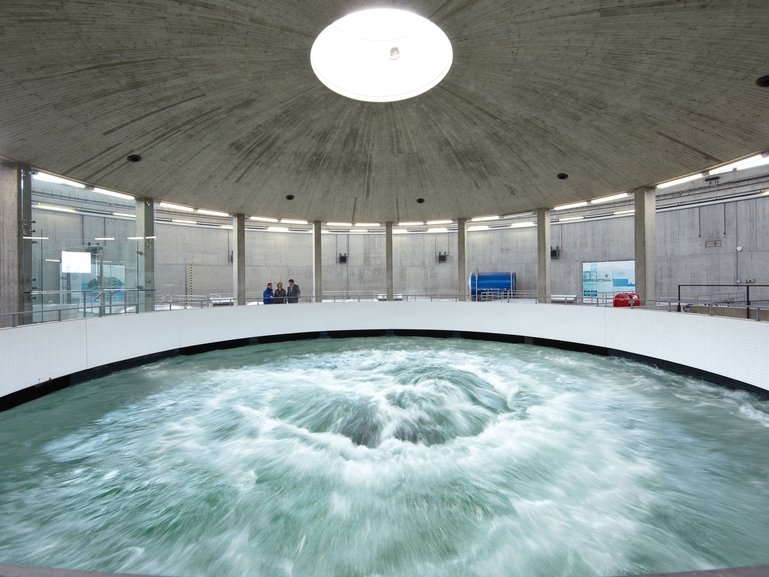
1. What Is Industrial Analytical Measurement?
Industrial analytical measurement refers to the continuous or online monitoring of specific chemical or physicochemical properties of liquids.
Typical parameters include:
- pH (acidity/alkalinity)
- Conductivity
- Dissolved Oxygen (DO)
- Turbidity
- Residual chlorine
- ORP (Oxidation-Reduction Potential)
- COD or organic load
These are not simple “quantities.”
They reflect the internal condition of a liquid.
For example:
- pH affects corrosion and reaction rates
- Dissolved oxygen determines biological treatment efficiency
- Conductivity indicates ionic concentration
- Residual chlorine reflects disinfection performance
Analytical measurement provides the data needed to adjust dosing, protect equipment, and maintain compliance.
2. Why Analytical Parameters Cannot Be Measured Directly
Similar to flow or level, analytical parameters cannot be directly “read” from a single physical point.
They must be inferred through:
- Chemical reactions
- Electrochemical effects
- Optical absorption or scattering
- Electrical signal changes
In other words:
Analytical measurement converts chemical information into measurable electrical signals through physical or chemical interaction.
The sensor does not measure “pH” or “chlorine” directly — it measures a reaction, a voltage, a current, or a light change caused by them.
3. Fundamental Principles Behind Analytical Measurement
Although industrial analytical instruments differ in structure and design, most are based on a few core physical or chemical principles.
3.1 Electrochemical Principles
This is one of the most common foundations in industrial liquid analysis.
Examples include:
- pH electrodes measuring hydrogen ion activity through potential difference
- ORP sensors detecting redox reactions
- Dissolved oxygen probes generating current through electrochemical reactions
The basic idea is:
Chemical interaction at the sensor surface → change in voltage or current → converted into a measurement signal
3.2 Conductivity Principle
Ions in solution carry electrical current.
When ionic concentration changes, the electrical conductivity between electrodes changes accordingly. By measuring this conductance, the system can estimate total dissolved solids or salinity.
Conductivity measurement is widely used in:
- Water treatment
- Boiler feedwater monitoring
- Deionized water systems
3.3 Optical Principles
Some analytical parameters rely on how light interacts with the medium.
For example:
- Turbidity sensors detect scattered light from suspended particles
- Colorimetric methods determine chemical concentration through light absorption
The underlying concept is:
Change in substance concentration → change in optical properties → converted into electrical signal
3.4 Influence of Medium Properties
Analytical measurement is strongly influenced by:
- Temperature
- Pressure
- Fouling and scaling
- Corrosive media
Therefore, industrial analytical measurement is not only about “can it be measured,” but also about:
- Stability
- Repeatability
- Resistance to interference
- Manageable maintenance
This is why online industrial analyzers are designed very differently from laboratory instruments.
4. Requirements in Industrial Applications
In real industrial environments, analytical measurement systems must:
- Operate continuously online
- Integrate with PLC, DCS, or SCADA systems
- Allow controlled and predictable calibration
- Maintain reasonable service intervals
- Withstand complex process conditions
Understanding the measurement principle helps engineers interpret data correctly and select suitable instruments for specific operating conditions.
5. Summary
The essence of analytical measurement is converting chemical and physicochemical changes in a liquid into usable electrical signals.
Whether based on electrochemical reactions, conductivity, or optical interaction, these methods are all rooted in fundamental physical and chemical laws.
A clear understanding of these principles provides a solid foundation for instrument selection, maintenance planning, and reliable process control.
– – – – – – – – – – – – – – – – – – – – – – – – – – – – – – – – – – – – – – – – – – – – – – – – – – – – – – – – – – – – – – – – – – – – – – – – – –
For detailed technical specifications, application advice, or commercial inquiries regarding a wider range of industry brands, please contact us via WhatsApp: +86 132 7933 7527 or Email: info@antletstech.com. Our experienced engineering team is ready to support your project.
-
 Electrical Control2 products
 -
 Speed measurement1 product
 -
 Temperature Measurement62 products
 -
 Pressure Measurement170 products
 -
 Level Measurement271 products
 -
 Flow Measurement183 products
 -
 Liquid Analysis38 products